Affinity Selection Mass Spectrometry
 Covalent Binding Assays
 Proteomics & Chemoproteomics
 Small Molecule Analysis
 Oligo Analysis
 Data Products
 View All Services
 Target Discovery & Validation
 Lead Generation
 Lead Selection & Optimization
 Preclinical Studies
 Biomarker Discovery, Development & Analysis
 View All Phases
 Radiotherapeutics
 Molecular Glues
 Targeted Protein Degraders
 Covalent Drugs
 DNA- and RNA-Targeting Drugs
 Oligonucleotide Therapeutics
 Kinase Inhibitors
 View All Modalities
 Oncology
 Immunology
 Neuroscience
 Metabolic Disease
 Infectious Disease
 Rare Diseases
 View All Therapeutic Areas
 CHIPP
CHIPP CysScout™
 DecryptM
 KinomeScout™
 NucleoBeads™
 PhotoTargetScout™
 PlasmaScout™
 Protein Turnover Atlas™
 Proteome Atlas™
 ProteomeScout™
 QuantScout™
 SignalingScout™
 SPICE
SPICE SurfaceScout™
 TargetScout™
 TurnoverScout™
 UbiScout™
 View All Technologies
 RapidFire-MS
 ICP-MS
 Orbitrap Astral Zoom
 Orbitrap Ascend
 View All Platforms
 Compound Management & Chemical Libraries
 Screening Laboratory
 Biochemistry & Chemical Biology
 Cell & Molecular Biology
 MS-based Proteomics
 Computational Biology
 Project Management
 View All Areas of Expertise
What are radiotherapeutics or radiopharmaceuticals?
Radiopharmaceuticals, or medicinal compounds that contain radioactive isotopes, represent a potent and attractive modality for the treatment and/or diagnosis of a wide range of human diseases. While traditional radiotherapy has proven to be a powerful clinical tool, especially in the treatment of many cancers, its utility is limited by the systemic toxicity associated with radiation exposure. The use of radiopharmaceuticals, therefore, further extends the therapeutic potential of this modality by enabling the targeted delivery of radioactivity to specific cells, limiting off-target effects. Radiopharmaceuticals, also known as radioligands, combine a target-binding ligand with a radioactive particle, such that binding between the ligand and its target directs precise delivery of the radioactive payload. The target-binding component of a radiopharmaceutical can take many forms, including antibodies, nucleic acids, and nanoparticles. Among these types, clinical interest has been particularly drawn to small-molecule radioligands, which exhibit the superior bioavailability and pharmacokinetics associated with small-molecule therapeutics. As technical and scientific innovations continue to advance the frontiers of drug discovery and development, next-generation small-molecule radiopharmaceuticals represent a compelling clinical option for the effective treatment and diagnosis a diverse array of human diseases.
What radiopharmaceuticals are currently in clinical use?
The most widespread therapeutic application of radioactivity is for the treatment of cancer, in which radiation exposure is used to kill tumor cells or inhibit their growth. Estimates suggest that between 30% and 50% of cancer patients undergo radiation therapy at some point during their treatment, with even higher rates for breast, anal, and esophageal cancers. However, these therapies are associated with significant side effects due to their general organ and tissue toxicity. As a result, the development of targeted radiotherapeutics for cancer treatment has been of considerable interest. For the treatment of metastatic castration-resistant prostate cancer (mCRPC), researchers have targeted the membrane protein prostate-specific membrane antigen (PMSA), which is commonly overexpressed in prostate cancer. These efforts led to the development of 177Lu-PSMA-617, a radioligand that selectively delivers beta-particle radiation to PMSA-expressing tumor cells and has been shown to meaningfully reduce pain severity in mCRPC patients. Other PMSA-targeted therapies have leveraged alternative radiation sources, such as actinium-225and copper-67, in an attempt to optimize therapeutic efficacy. Other targets of interest for small-molecule radiotherapeutics include fibroblast activation protein (FAP), poly(ADP-ribose) polymerase (PARP), and a variety of membrane proteins. Overall, of the 13 radiopharmaceuticals currently approved worldwide for therapeutic purposes, all are intended for cancer treatment, highlighting the utility of this approach to improve clinical outcomes for oncology patients.
How are radiopharmaceuticals used for diagnostic purposes?
The remaining 54 globally approved radiopharmaceuticals are intended for diagnostic purposes, enabling radioimaging of tumors, the central nervous system, the cardiovascular system, and other relevant clinical targets. In radioimaging, radioactive compounds localize in specific cells, tissues, or areas of interest and can be detected in vivo by techniques such as positron emission tomography (PET) and single-photon emission computed tomography (SPECT). By leveraging this technology, clinicians can detect tumors, evaluate biomarker expression, and predict responsiveness to subsequent treatment. Beyond its oncological applications, radioimaging has been successfully applied towards neurodegenerative disorders, particularly in recent decades. The radioligand [18F]AV-45, for example, effectively labels amyloid (Aβ) depositions to monitor the progression of Alzheimer’s disease, while tau-targeting radioligands exhibit specificity for tau fibrils over their Aβ counterparts. Other radiopharmaceuticals target factors like translocator protein (TSPO) to enable visualization and tracking of neuroinflammation, a known feature of many neurodegenerative conditions.
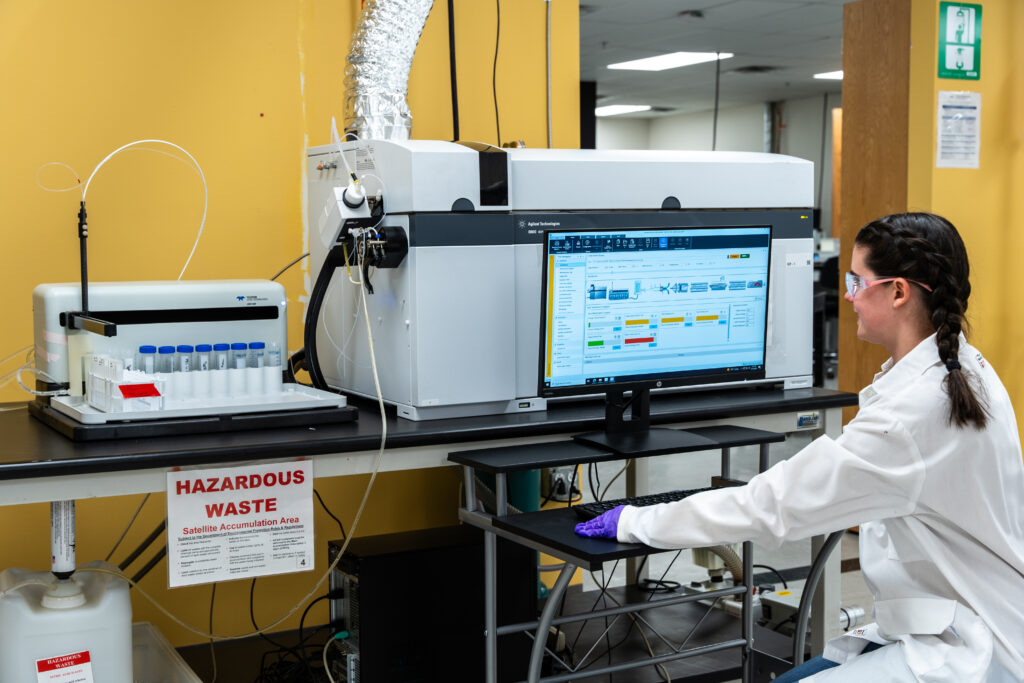
What services does Momentum Biotechnologies offer to support the discovery and development of radiotherapeutics?
The development of radiotherapeutics poses unique challenges compared to their non-radioactive counterparts. Most significantly, dealing with radioactive compounds requires adherence to specialized protocols to ensure researcher safety and regulatory compliance. These requirements impose both financial and logistical burdens that can be particularly onerous during the early stages of drug discovery and development. In light of these challenges, inductively coupled plasma mass spectrometry (ICP-MS)has emerged as one of the most valuable technologies in radioligand development. This powerful methodology (which we profiled in a previous blog post) can be used to characterize non-radioactive metal conjugates, which are then used to predict the activity of analogous radioligands. In contrast to traditional quantification methods based on scintillation counting, this technique alleviates radiation-associated safety concerns by substituting the radioisotope with a stable isotope or surrogate payload, such as a lanthanide. ICP-MS can quantify specific metals with sub-ppt sensitivity and is compatible with cell culture samples, biofluids (such as plasma, urine, and CSF), and tissue/tumor samples. Because up to 14 ligands can be multiplexed into a single experiment, ICP-MS can markedly increase experimental throughput and reduce the number of animals required for in vivo biodistribution studies. By leveraging this powerful technology, researchers can develop novel radioligand therapeutics with unprecedented efficiency, paving the way for future generations of targeted radiopharmaceuticals.
Ready to learn more about how our ICP-MS services can accelerate your radiotherapeutics research and development? Get in touch
Sources
Abiraj K, Mansi R, Tamma M-L, Fani M, Forrer F, Nicolas G, Cescato R, Reubi JC & Maecke HR. Bombesin Antagonist-Based Radioligands for Translational Nuclear Imaging of Gastrin-Releasing Peptide Receptor-Positive Tumors. J Nucl Med 52, 1970-1978 (2011).
Ammann AA. Inductively coupled plasma mass spectrometry (ICP MS): a versatile tool. J Mass Spectrom 42, 419-427 (2007).
Baskar R, Lee KA, Yeo R & Yeoh K-W. Cancer and Radiation Therapy: Current Advances and Future Directions. Int J Med Sci 9, 193-199 (2012).
Beck H, Härter M, Haß B, Schmeck C & Baerfacker L. Small molecules and their impact in drug discovery: A perspective on the occasion of the 125th anniversary of the Bayer Chemical Research Laboratory. Drug Disc Today 27, 1560-1574 (2022).
Bodei L, Herrmann K, Schöder H, Scott AM & Lewis JS. Radiotheranostics in oncology: current challenges and emerging opportunities. Nat Rev Clin Oncol 19, 534-550 (2022).
Bodei L, Kavan P, Liberman M, Taunk N, Metser U, Juneau D, O’Reilly EM, Ma J, Cioci R & Razak ARA. FRONTIER: FAPi radioligand open-label, phase 1 study to evaluate safety, tolerability and dosimetry of [Lu-177]-PNT6555–A dose escalation study for treatment of patients with select solid tumors. J Clin Oncol 41, TPS3161 (2023).
Bryant AK, Banegas MP, Martinez ME, Mell LK & Murphy JD. Trends in Radiation Therapy among Cancer Survivors in the United States, 2000-2030. Cancel Epidemiol Biomarkers Prev 26, 963-970 (2017).
Chaturvedi S & Mishra AK. Small Molecule Radiopharmaceuticals – A Review of Current Approaches.Front Med (Lausanne) 3, 5 (2016).
Choe YS & Lee K-H. PET Radioligands for Imaging of Tau Pathology: Current Status. Nucl Med Mol Imaging 49, 251-257 (2015).
Clases D & de Vega RG. Facets of ICP-MS and their potential in the medical sciences–Part 1: fundamentals, stand-alone and hyphenated techniques. Anal Bioanal Chem 414, 7337-7361 (2022).
Crabbé M, Opsomer T, Vermeulen K, Ooms M & Segers C. Targeted radiopharmaceuticals: an underexplored strategy for ovarian cancer. Theranostics 14, 6281-6300 (2024).
Crişan G, Moldovean-Cioroianu NS, Timaru D-G, Andrieş, Căinap C & Chiş V. Radiopharmaceuticals for PET and SPECT Imaging: A Literature Review over the Last Decade. Int J Mol Sci 23, 5023 (2022).
Dhoundiyal S, Srivastava S, Kumar S, Singh G, Ashique S, Pal R, Mishra N & Taghizadeh-Hesary F. Radiopharmaceuticals: navigating the frontier of precision medicine and therapeutic innovation. Eur J Med Res 29, 26 (2024).
Hoffman SLV, Mixdorf JC, Kwon O, Johnson TR, Makvandi M, Lee H, Aluicio-Sarduy E, Barnhart TE, Jeffery JJ, Patankar MS, Enge JW, Bednarz BP & Ellison PA. Preclinical studies of a PARP targeted, Meitner-Auger emitting theranostic radiopharmaceutical for metastatic ovarian cancer. Nucl Med Biol 122, 108368 (2023).
Hofman MS, Violet J, Hicks RJ, Ferdinandus J, Thang SP, Akhurst T, Iravani A, Kong G, Kumar AR, Murphy DG, Eu P, Jackson P, Scalzo M, Williams SG & Sandhu S. [177Lu]-PSMA-617 radionuclide treatment in patients with metastatic castration-resistant prostate cancer (LuPSMA trial): a single-centre, single-arm, phase 2 study. The Lancet Oncology 19, 825-833 (2018).
Klika KD, Han J, Busse MS, Soloshonok VA, Javahershenas R, Vanhaecke F & Makarem A. Inductively Coupled Plasma-Mass Spectrometry (ICP-MS): An Emerging Tool in Radiopharmaceutical Science. J Am Chem Soc 146, 30717-30727 (2024).
Korde A, Mikolajczak R, Kolenc P, Bouziotis P, Westin H, Lauritzen M, Koole M, Herth MM, Bardiès M, Martins AF, Paulo A, Lyashchenko SK, Todde S, Nag S, Lamprou E, Abrunhosa A, Giammarile F & Decristoforo C. Practical considerations for navigating the regulatory landscape of non-clinical studies for clinical translation of radiopharmaceuticals. EJNMMI Radiopharm Chem 7, 18 (2022).
Lapi SE, Scott PJH, Scott Am, Windhorst AD, Zeglis BM, Abdel-Wahab M, Baum RP, Buatti JM, Giammarile F, Kiess AP, Jalilian A, Knoll P, Korde A, Kunikowska J, Lee ST, Paez D, Urbain J-L, Zhang J & Lewis JS. Recent advances and impending challenges for the radiopharmaceutical sciences in oncology. The Lancet Oncology 25, e236-e249 (2024).
Lunger L, Tauber R, Feuerecker B, Gschwend J, Eiber M & Heck MM. Narrative review: prostate-specific membrane antigen-radioligand therapy in metastatic castration-resistant prostate cancer.Transl Androl Urol 10, 3963-3971 (2021).
Masdeu JC, Pascual B & Fujita M. Imaging Neuroinflammation in Neurodegenerative Disorders. J Nucl Med 63, 45S-52S (2022).
McInnes LE, Cullinane C, Roselt PD, Jackson S, Blyth BJ, van Dam EM, Zia NA, Harris MJ, Hicks RJ & Donnelly PS. Therapeutic Efficacy of a Bivalent Inhibitor of Prostate-Specific Membrane Antigen Labeled with 67Cu. J Nucl Med 62, 829-832 (2021).
Mee T, Kirkby NF, Defourny NN, Kirkby KJ & Burnet NG. The use of radiotherapy, surgery and chemotherapy in the curative treatment of cancer: results from the FORTY (Favourable Outcomes from RadioTherapY) project. Br J Radiol 96, 20230334 (2023).
Salih S, Alkatheeri A, Alomaim W & Elliyanti A. Radiopharmaceutical Treatments for Cancer Therapy, Radionuclides Characteristics, Applications, and Challenges. Molecules 27, 5231 (2022).
Sartor O, de Bono J, Chi KN, Fizazi K, Herrmann K, Rahbar K, Tagawa ST, Nordquist LT, Vaishampayan N, El-Haddad G, Park CH, Beer TM, Armour A, Pérez-Contreras WJ, DeSilvio M, Kpamegan E, Gericke G, Messmann RA, Morris MJ, Krause BJ & VISION Investigators. Lutetium-177-PMSA-617 for Metastatic Castration-Resistant Prostate Cancer. N Engl J Med 385, 1091-1103 (2021).
Taunk NK, Escorcia FE, Lewis JS & Bodei L. Radiopharmaceuticals for Cancer Diagnosis and Therapy. J Cancer 30, 218-223 (2024).
Tian M, Civelek AC, Carrio I, Watanabe Y, Kang KW, Murakami K, Garibotto V, Prior JO, Barthel H, Zhou R, Hou H, Dou X, Jin C, Zuo C, Zhang H & Molecule Imaging-based Precision Medicine Task Group of A3 Foresight Program. International consensus on the use of tau PET imaging agent 18F-flortaucipir in Alzheimer’s disease. Eur J Nucl Med Mol Imaging 49, 895-904 (2022).
Tiepolt S, Patt M, Aghakhanyan G, Meyer PM, Hesse S, Barthel H & Sabri O. Current radiotracers to image neurodegenerative diseases. EJNMMI Radiopharm Chem 4, 17 (2019).
van der Heide CD & Dalm SU. Radionuclide imaging and therapy directed towards the tumor microenvironment: a multi-cancer approach for personalized medicine. Eur J Nucl Med Mol Imaging 49, 4616-4641 (2022).
Wallimann RH, Schindler P, Hensinger H, Tschan VJ, Busslinger SD, Kneuer R, Müller C & Schibli R. Inductively Coupled Plasma Mass Spectrometry–A Valid Method for the Characterization of Metal Conjugates in View of the Development of Radiopharmaceuticals. Mol Pharm 20, 2150-2158 (2023).
Wallimann RH, Hensinger H, Müller C, Schibli R, Kneuer R & Schindler P. Liquid Chromatography ICP-MS to Assess the Stability of 175Lu- and natGa-Based Tumor-Targeting Agents towards the Development of 177Lu- and 68Ga-Labeled Radiopharmaceuticals. Pharmaceutics 16, 299 (2024).
Wang K & Tepper JE. Radiation therapy-associated toxicity: Etiology, management, and prevention.CA Cancer J Clin 71, 437-454 (2021).
Werner RA, Thackeray JT, Diekmann J, Weiberg D, Bauersachs J & Bengel FM. The Changing Face of Nuclear Cardiology: Guiding Cardiovascular Care Toward Molecular Medicine. J Nucl Med 61, 951-961 (2020).
Wong DF, Rosenberg PB, Zhou Y, Kumar A, Raymont V, Ravert HT, Dannals RF, Nandi A, Brašic JR, Ye W, Hilton J, Lyketsos C, Kung HF, Joshi AD, Skovronsky DM & Pontecorvo MJ. In Vivo Imaging of Amyloid Deposition in Alzheimer’s Disease using the Novel Radioligand [18F]AV-45 (Florbetapir F 18).J Nucl Med 51, 913-920 (2010).
Zhang S, Wang X, Gao X, Chen X, Li L, Li G, Liu C, Miao Y, Wang R & Hu K. Radiopharmaceuticals and their applications in medicine. Sig Transduct Target Ther 10, 1 (2025).
Zhang T, Lei H, Chen X, Dou Z, Yu B, Su W, Wang W, Jin X, Katsube T, Wang B, Zhang H, Li Q & Di C. Carrier systems of radiopharmaceuticals and the application in cancer therapy. Cell Death Discovery 10, 16 (2024).
Zhao Y, Hsu JC, Hu S & Cai W. PET imaging of PD-L1 with a small molecule radiotracer. Eur J Nucl Med Mol Imaging 51, 1578-1581 (2024).